

+918048037212

Currently it only shows your basic business info. Start adding relevant business details such as description, images and products or services to gain your customers attention by using Boost 360 android app / iOS App / web portal.

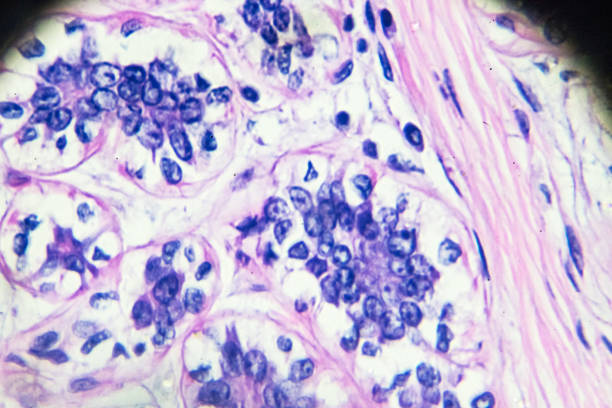
breast biopsy is a medical procedure performed to obtain a tissue sample from the breast for examination under a microscope. This procedure is typically done to diagnose or rule out breast cancer or other breast abnormalities. Here's an overview of the breast biopsy procedure and related services is provide in I-CARE DIAGNOSTIC AND DIALYSIS CENTER: 1. Types of Breast Biopsies: Core Needle Biopsy (CNB): A larger, hollow needle is used to remove small cylindrical tissue samples from the breast. Stereotactic Biopsy: This is typically used for non-palpable (not easily felt) breast abnormalities. It involves the use of imaging guidance to precisely target and obtain tissue samples. Ultrasound-Guided Biopsy: Ultrasound imaging is used to guide the needle into the breast to obtain a tissue sample. 2. Preparation: Before the biopsy, your healthcare provider will discuss the procedure with you, review your medical history, and may order imaging tests (such as mammograms, ultrasounds, or MRI) to locate the area of concern. Depending on the type of biopsy, you may be instructed not to eat or drink for a certain period before the procedure. 3. The Procedure: The procedure is typically performed in an outpatient setting, often in a radiology department or breast clinic. You may be given local anesthesia to numb the area before the biopsy. For core needle, stereotactic, ultrasound-guided, and MRI-guided biopsies, a needle is inserted into the breast to collect tissue samples. For surgical biopsies, you will be in an operating room under general anesthesia, and the surgeon will remove the tissue sample. 4. After the Biopsy: You may experience mild discomfort, bruising, or swelling at the biopsy site, which usually resolves in a few days. Tissue samples are sent to a pathology laboratory for examination by a pathologist. 5. Pathology Report: The pathologist examines the tissue sample to determine if it is cancerous, benign (non-cancerous), or atypical. The results are typically shared with your healthcare provider, who will discuss the findings with you and recommend further treatment or monitoring if necessary.


